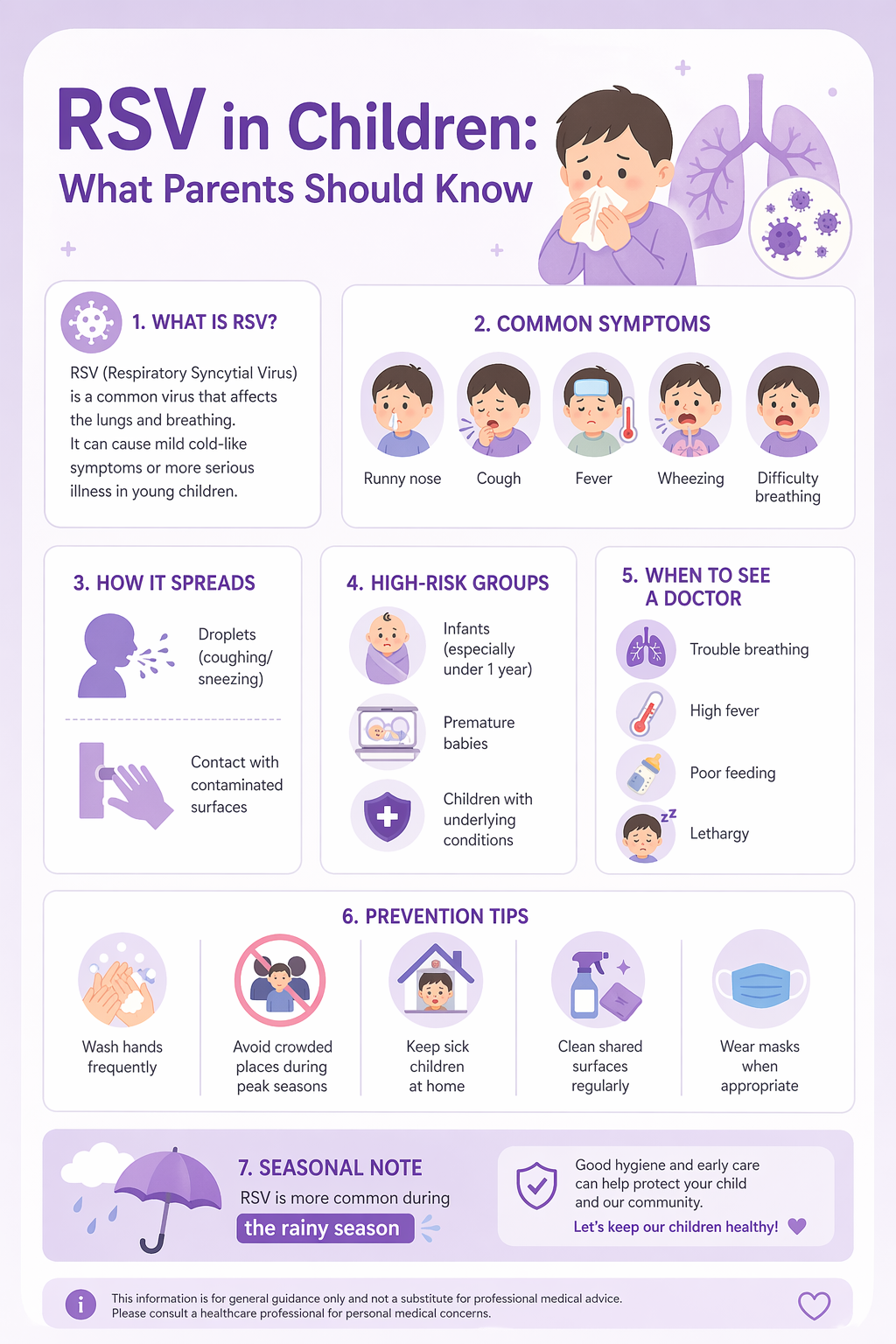
RSV is a common respiratory virus that affects the lungs and breathing passages.
April 24, 2026by
CMIS Media Team
RSV (Respiratory Syncytial Virus)
RSV (Respiratory Syncytial Virus) is a common respiratory virus that often causes cold-like symptoms. While most healthy adults and older children experience only mild illness, RSV can be more serious for infants and young children, especially those under 2 years old.
RSV infects the nose, throat, lungs, and airways, and spreads through contact with an infected person or by touching contaminated surfaces and then touching the eyes, nose, or mouth.
RSV often circulates alongside other seasonal respiratory viruses, making it difficult to distinguish from illnesses such as COVID-19 and the flu.
Risk Factors
RSV can affect people of all ages, and certain groups are at greater risk for RSV-related complications like premature infants, infants age 6 months and younger, chronic heart or lung disease, compromised immune systems, and older adults (65+).
Signs & Symtoms
Most people infected are contagious for 3 to 8 days with mild symptoms, which may include:
Coughing
Sneezing
Runny nose
Fever
Prevention
No vaccine to prevent RSV, but there are actions you can take now to help prevent it:
Wash your hands often, for at least 20 seconds using soap and water
Clean frequently touched surfaces
Avoid close contact with others who may be sick and stay home when you are sick